April 17, 2026
Beyond the Pipe: Working in Live Hospitals
Healthcare Construction Standards in Action
In most construction environments, the jobsite revolves around the build. In healthcare, it revolves around people, patients, clinicians, and critical operations that never stop. That shift changes everything.
Working in a live hospital isn’t just about installing mechanical systems. It’s about executing with accuracy in an environment where system downtime isn’t an option, disruptions carry real risk, and every decision has a downstream impact. The standards are higher, the coordination tighter, and the margin for error essentially zero.
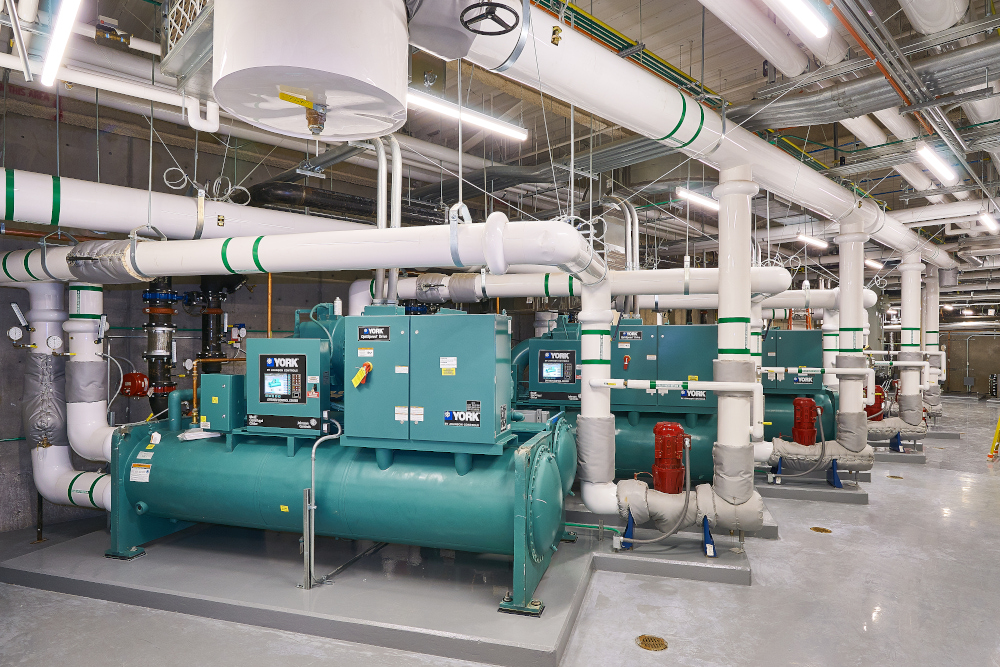
The Reality of Building in Occupied Healthcare Facilities
Hospitals operate 24/7. That means construction teams are entering fully functioning ecosystems in which air quality, temperature control, and system dependability directly affect patient outcomes.
Unlike traditional projects, you’re not merely managing logistics—you’re managing risk in real time. Work often takes place in close proximity to sensitive areas such as operating rooms, intensive care units, and sterile environments. Even routine mechanical work can’t be treated as routine.
This requires a mindset shift:
Infection Control Is Operational Control
One of the biggest differentiators in healthcare construction is infection prevention. Mechanical systems play a central role here—especially HVAC.
Airflow, pressurization, filtration, and containment aren’t just design elements—they’re safeguards. When modifications are made, even temporarily, those safeguards can be compromised if not handled correctly.
That’s why teams must:
This isn’t a one-time setup. It’s an active process that evolves with each phase of the project.
Coordination Is the Backbone
In a live hospital, communication isn’t a courtesy—it’s infrastructure.
Every shutdown, tie-in, or system adjustment requires alignment across multiple stakeholders: facility managers, clinical staff, infection prevention teams, and construction crews. Missed communication doesn’t just delay schedules—it can disrupt care delivery.
Top-performing teams prioritize:
When coordination is done right, construction becomes an extension of the hospital’s workflow—not a disruption to it.
Phasing and Precision Execution
Phasing in healthcare construction isn’t just about sequencing work—it’s about protecting operations while enabling progress.
Projects are broken into controlled phases to isolate impact, preserve system integrity, and ensure continuity of care. Mechanical systems must remain live during modifications, requiring temporary systems, redundant planning, and carefully timed transitions.
Execution in this environment calls for:
There’s no room for “figure it out in the field.” Success is built before boots hit the ground.
Why Experience Matters
Not every contractor is equipped to operate in a live healthcare environment. It requires more than technical capability—it demands discipline, foresight, and a deep understanding of how mechanical systems interact with patient care.
At Archer Mechanical, we approach healthcare construction with a systems-first mindset. We don’t just install equipment—we integrate solutions into situations where performance, safety, and reliability are non-negotiable.
Our teams are trained to think beyond the pipe:
Those are the questions that define success in healthcare projects.
Healthcare facilities are evolving—expanding capacity, upgrading systems, and adapting to new standards of care. That means more construction in active environments, not less.
The contractors who will lead in this space are the ones who can balance technical execution with operational awareness. It’s not only about building systems—it’s about supporting places where lives are on the line.
Because in a live hospital, the work doesn’t stop—and neither can we.